The following Monday, my attorney filed the challenge.
For the first time in months, I felt as though the situation had moved out of my hands and into the proper system.
That did not make me calm.
It simply gave the uncertainty a shape.
There were deadlines.
Hearings.
Documents.
Responses.
Rules.
Things I could understand.
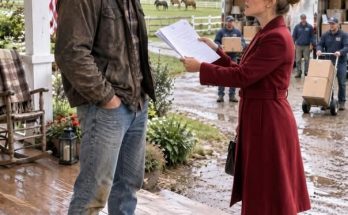
A few days later, Clare returned with two men carrying clipboards.
She stopped at the gate.
I walked outside.
“Can I help you?”
She held up a document.
“We need access.”
“No.”
“You don't get to refuse.”
“I do if there's no authorization.”
She glanced toward the men.
Then she showed me the court order.
My attorney had warned me about it.
The order limited unauthorized access while the ownership dispute was being considered.
I read the first page.
Then I looked at Clare.
“You can't come in.”
Her face tightened.
“You're enjoying this.”
“No.”
“I know you are.”
“I just want the rules followed.”
She stared at me.
For a moment, I thought she might argue.
Instead, she turned around.
“Let's go.”
The men followed her.
I watched the SUV disappear.
There was no satisfaction in it.
Only relief.
The next weeks were filled with preparation.
My lawyer wanted everything organized.
Not emotionally.
Chronologically.
What happened first?
Who witnessed it?
What document existed?
When was it created?
Who signed it?
What evidence supported it?
We worked through the timeline carefully.
My parents' original estate documents.
The transfer.
The LLC formation.
The property records.
The tax payments.
The maintenance history.
Clare's filings.
The statements from relatives.
The preservation application.
The witness declarations.
The recording.
Everything went into the file.
I began to understand something about legal disputes.
The loudest moment isn't necessarily the most important one.
A quiet signature from years earlier can matter more than a room full of angry accusations.
And there was one quiet signature we had not fully understood yet.
My father's addendum.
My lawyer kept returning to it.
“This is important,” he said.
“Because it explains his intention?”
“Yes. And because it connects your years of work to that intention.”
I looked at the page.
Dad's handwriting appeared nowhere on the final text, but his signature sat beneath the statement.
I remembered him signing papers at the kitchen table.
Usually, he complained about paperwork.
“Too many forms,” he'd say.
Then he'd sign anyway.
I wondered if he had known this day might come.
The thought made me uncomfortable.
I didn't want to believe my parents had anticipated their children fighting.
Maybe Dad had simply been thorough.
Maybe he had seen how much time I had spent maintaining the ranch and wanted that contribution formally recognized.
Either way, the document existed.
And it mattered.
Aunt Linda eventually agreed to speak with my attorney.
She had supported Clare earlier.
When we met, she looked embarrassed.
“I didn't understand the whole situation,” she said.
“What did Clare tell you?”
“That you were getting everything.”
“I wasn't.”
“I know that now.”
She looked down at her hands.
“She made it sound like you were taking advantage of the family.”
I didn't answer.
There wasn't much to say.
Aunt Linda eventually gave a statement describing how I had lived and worked at the ranch for years.
It wasn't revenge against Clare.
It was simply a correction of the record.
More witnesses followed.
A neighbor.
A former ranch worker.
A feed supplier.
Someone who had watched Dad and me repair the fencing after a winter storm.
Their statements were small pieces.
But together, they showed continuity.
The ranch hadn't suddenly become my responsibility when my parents died.
I had already been doing the work for years.
That mattered.
Meanwhile, Clare's financial situation continued to deteriorate.
I heard bits of information from relatives.
Her investment had not recovered.
She and Daniel were under pressure.
They had hoped the ranch could solve that problem.
I deliberately avoided asking for details.
I didn't want her financial troubles to become another weapon in the dispute.
My goal was narrower.
Protect the property.
Resolve the ownership issue.
Then move forward.
The preservation status became another important part of the case.
It did not determine ownership by itself.
But it meant the plans Clare and Daniel had discussed with developers were no longer as simple as they had imagined.
I kept thinking about the conversation I'd overheard near the barn.
The western acreage.
The value.
The development possibilities.
Now those plans faced additional restrictions.
The property had become harder to turn into quick money.
That was exactly what I wanted.
Not because I wanted Clare to suffer.
Because I wanted the ranch to remain a ranch.
The hearing date finally arrived.
That morning, I put on Dad's old watch.
It was scratched along the back.
The strap had been replaced twice.
The face was slightly cloudy.
I almost left it at home.
Then I slipped it onto my wrist.
At the courthouse, Clare was already there.
She sat beside her attorney.
She didn't look at me.
I sat beside mine.
The courtroom was quieter than I expected.
No shouting.
No dramatic confrontation.
Just papers, lawyers, a judge, and people waiting for their turn to speak.
My attorney presented the estate documents first.
Then the LLC records.
Then the property history.
Then the maintenance records.
The judge examined each carefully.
Clare's attorney argued that the inheritance should have been distributed more evenly.
He emphasized the value of the ranch.
He discussed the difference between the ranch and the other assets.
He questioned the circumstances surrounding the transfer.
But my lawyer returned to the written instructions left by my parents.
He also presented evidence showing that I had maintained and operated the property for years.
The witnesses helped establish that history.
Aunt Linda testified.
She described my daily responsibilities.
A former worker explained how often I worked beside Dad.
A neighbor described seeing me maintain the fencing and livestock.
Then came the addendum.
The courtroom became very quiet.
My attorney placed a certified copy before the judge.
The document explained my father's intention that the ranch pass to me because of my long-term contribution to maintaining and operating it.
The judge read it slowly.
Clare looked down.
For the first time since this began, I saw her confidence falter.
Her attorney asked questions about the document.
My lawyer answered them.
The judge reviewed the supporting records.
I sat still.
I thought about the kitchen table.
The porch.
The barn.
The horses.
Mom's garden.
Dad's old chair.
Everything that had brought me there.
Eventually, the judge ruled.
The transfer Clare had obtained was reversed.
The deed was restored to me.
Certain legal costs associated with the dispute were also awarded.
I didn't immediately react.
I simply looked at my attorney.
He gave me a small nod.
Outside the courthouse, the winter air felt sharp.
My attorney smiled.
“That settles the ownership question.”
I looked at the watch on my wrist.
Dad had worn it for years.
Now it was mine.
The family reaction was complicated.
Some relatives apologized.
Some avoided me.
A few believed I had pushed the matter too far.
I didn't argue.
There was no point.
The court had resolved the ownership issue.
More importantly, the written record showed what my parents had intended.
Clare's problems did not disappear.
I heard later that she and Daniel eventually sold their condominium after another investment went badly.
I never celebrated that.
Whatever had happened between us, I didn't want her life destroyed.
I simply wanted her to stop trying to solve her problems with something that belonged to me.
Back at the ranch, I returned to work.
The riding arrangement expanded.
The photographer continued renting occasional space.
I began hosting small community events.
The property became busier.
But it also became more stable.
Using part of the money recovered through the legal process, I created a small scholarship in my parents' names.
It wasn't enormous.
It didn't need to be.
I wanted their names connected to something useful.
Months passed.
The legal fight became a memory instead of a daily threat.
I repaired the barn.
I replaced another section of fence.
I planted new trees near the farmhouse.
The kitchen still had Mom's old cutting board.
Dad's chair remained by the window.
The ranch looked much the same.
But I was different.
I no longer assumed that family automatically meant trust.
I also learned that protecting something didn't require becoming cruel.
Then, one evening, I saw Clare's SUV coming up the driveway.
My first reaction was immediate.
My shoulders tightened.
I stopped what I was doing.
The SUV parked near the house.
Clare remained inside for several minutes.
Eventually, she opened the door.
She walked toward the porch alone.
When she reached the steps, she stopped.
“I came to apologize.”
I didn't answer.
She looked down at the porch boards.
“I shouldn't have done any of it.”
Still, I said nothing.
“I convinced myself that getting the money would solve everything.”
Her voice was quieter than I had ever heard it.
“It didn't.”
The evening wind moved across the pasture.
She swallowed.
“I don't expect you to forgive me.”
I looked toward the hills.
Then back at her.
“I can't pretend none of it happened.”
She nodded.
“I know.”
“But I hope you figure out what you actually want.”
She looked at me.
“This place isn't just an asset to me.”
I touched the porch railing.
“It's home.”
Her eyes filled with tears.
“I know.”
She left a few minutes later.
I watched her SUV disappear down the driveway.
The horses grazed quietly beyond the fence.
Crickets had begun calling from the grass.
The ranch was finally quiet.
I stood on the porch until the last light disappeared behind the hills.
For months, I had thought protecting the ranch meant defeating my sister.
It didn't.
It meant refusing to let fear make my decisions.
It meant keeping records when people told me paperwork didn't matter.
It meant asking for help when I didn't know what to do.
It meant standing firm without becoming the kind of person I was fighting against.
The ranch was still there.
So was I.
I rested both hands on the porch railing.
Then I looked across the pasture.
“It's safe now, Dad.”
For the first time in a long time, I believed it.
Click here to continue reading: PART 5: After Clare left the ranch, I expected peace, but the first quiet morning exposed how much of the family damage still remained
The papers on my kitchen table looked ordinary until I realized my sister had already started planning a future that did not include me
Part 4 of 12