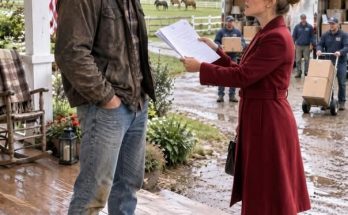
By late summer, the educational program had become a regular part of the ranch.
The groups remained small.
That was intentional.
I didn't want crowds.
I wanted students to hear the animals, smell the soil, and understand that agriculture wasn't an abstract idea on a worksheet.
The riding school continued using the pasture.
The photographer booked occasional weekends.
The scholarship helped another student begin vocational training.
The ranch still required money.
Nothing had magically become easy.
The barn needed repairs.
The fencing needed constant attention.
Insurance costs increased.
Feed prices changed.
Some months were better than others.
But now I understood the numbers.
Dad had always known that land could be beautiful and expensive at the same time.
I had finally learned the same lesson.
I created a reserve account for emergencies.
Another account covered taxes and insurance.
A third handled routine maintenance.
I stopped mixing personal spending with ranch expenses.
The structure made everything clearer.
It also gave me peace.
If something happened again, I would have records.
I would have reserves.
I would have a plan.
I didn't want to live in fear of another dispute.
I simply didn't want to be unprepared.
One afternoon, my attorney called.
He said the final administrative matters from the property dispute had been completed.
“There shouldn't be anything else,” he said.
I laughed.
“Don't say that too confidently.”
He laughed too.
“Fair enough.”
After we hung up, I deleted several old calendar reminders.
Court deadline.
Document response.
Hearing preparation.
Attorney meeting.
The screen suddenly looked empty.
It was the strangest feeling.
For months, those reminders had controlled my schedule.
Now there was nothing.
I realized I had never replaced them with anything for myself.
So I started.
Every Sunday morning, I reserved two hours with no ranch work.
No business.
No appointments.
Nothing.
Sometimes I read.
Sometimes I drove into town.
Sometimes I simply sat on the porch.
At first, I felt guilty.
Then I stopped.
Mom's letter came back to me.
She had wanted me to build a life.
Not just maintain one.
I began taking short trips.
Nothing extravagant.
A weekend away.
A day visiting an old friend.
A few hours fishing.
Small things.
But they mattered.
The ranch remained home.
It didn't have to be my entire identity.
One evening, Clare came by with an unexpected question.
“Would you ever consider letting me help with the scholarship?”
I looked at her.
“In what way?”
“I could contribute.”
I hesitated.
She noticed.
“I’m not asking for control.”
“I know.”
“I just want to do something useful.”
I thought about it.
Finally, I said, “You can sponsor one student.”
She smiled.
“Really?”
“Under the same rules as everyone else.”
“Fair.”
She eventually sponsored a student studying veterinary assistance.
When I saw the paperwork, I noticed she had contributed more than the minimum.
I didn't mention it.
Neither did she.
It was better that way.
Over time, we developed a strange new relationship.
Not the relationship we had before our parents died.
Not yet.
Maybe never.
But something quieter.
We spoke occasionally.
We didn't discuss ownership.
We didn't discuss the court case.
We didn't discuss money unless it concerned the scholarship.
There were still boundaries.
They were necessary.
One afternoon, she asked whether she could bring Daniel to the ranch.
I told her that was fine as long as he came as a visitor.
She laughed.
“Understood.”
They arrived together.
Daniel looked uncomfortable.
He stood beside Clare while I showed them the educational area.
After a while, he said, “I owe you an apology too.”
I nodded.
He looked toward the barn.
“I should never have encouraged what we did.”
“You were under financial pressure.”
“That doesn't excuse it.”
“No.”
He accepted that.
There was no dramatic reconciliation.
Just an acknowledgment.
Sometimes that was enough.
The three of us stood near the fence watching the students.
One child was trying to brush a horse that clearly preferred eating grass.
The horse kept turning away.
Everyone laughed.
Daniel smiled.
“This place is different now.”
“It still has the same land.”
“No,” he said. “I mean it feels different.”
I understood.
The ranch was no longer a battlefield.
It had become a place where people came to learn.
That mattered more than I had expected.
A month later, the scholarship committee met.
I had invited two local educators and a retired rancher.
We reviewed applications.
One student wanted to study agricultural technology.
Another wanted veterinary training.
A third wanted to become an electrician.
We selected three.
Not because they were perfect.
Because they had plans and were willing to work.
When I signed the award letters, I thought about the money Clare had once wanted from the ranch.
A million-dollar property could have been sold in one transaction.
Instead, small pieces of its value were becoming opportunities for other people.
That felt like a better inheritance.
Not just for me.
For everyone.
Then came the first anniversary of the court decision.
I almost forgot about it.
Clare didn't.
She sent me a message.
“One year.”
I stared at it.
I replied:
“One year.”
She wrote:
“Feels longer.”
I agreed.
That evening, I walked to the hill behind the barn.
It was one of Dad's favorite places.
From there, I could see the farmhouse, the pastures, the road, and the distant tree line.
I remembered the day Clare had first arrived with her lawyer.
The confidence in her voice.
The folder.
The statement about the deed.
I remembered how small I had felt.
Not because I believed she was right.
Because I couldn't believe my own sister would do it.
Now, standing on the hill, the memory felt distant.
It was still painful.
But it no longer controlled me.
I realized something important.
The ranch hadn't healed me.
I had done that slowly myself.
The property had simply given me somewhere to practice.
Patience.
Responsibility.
Boundaries.
Forgiveness.
One evening, Clare joined me on the hill.
She brought two cups of coffee.
“Peace offering?”
I took one.
“Accepted.”
She looked toward the farmhouse.
“Do you ever regret not selling?”
“No.”
“Not even once?”
“Sometimes I regret the repair bills.”
She laughed.
“Fair.”
We stood together.
Then she said, “I was wrong about something.”
“What?”
“I thought keeping the ranch meant you were stuck.”
I waited.
“You weren't stuck.”
She looked across the pasture.
“You built something.”
I smiled.
“I learned from Dad.”
She shook her head.
“You learned from yourself too.”
That meant more than she probably realized.
The sun was nearly gone.
The hills were darkening.
We walked back toward the house.
At the porch, Clare stopped.
“Mom would have loved the students.”
“I think so.”
“She would have complained about the garden.”
“She always complained about the garden.”
Clare laughed.
“She said you watered it too much.”
“She said everyone watered it too much.”
We laughed together.
It was the first time in years that the laughter felt uncomplicated.
Not forced.
Not nervous.
Just familiar.
Later that night, I opened Mom's letter again.
I had memorized parts of it.
But I still read the whole thing.
She had wanted me to have a life.
I finally understood what she meant.
A life wasn't something you received with an inheritance.
It was something you built after the inheritance was gone.
The ranch had given me responsibility.
The lawsuit had given me boundaries.
The loss of my parents had given me grief.
And the years afterward had taught me what to do with all three.
I closed the letter.
Outside, the horses were quiet.
The porch light reflected faintly against the kitchen window.
I could hear the refrigerator humming.
For a moment, everything felt exactly as it should.
Then my phone rang.
It was Mr. Collins.
“Jacob?”
“Yes?”
“I wanted to tell you something.”
“What?”
“There’s an old county planning meeting next month.”
I waited.
“They're reviewing several properties near the eastern road.”
My stomach tightened slightly.
“Why are you telling me?”
“Because one of the parcels borders yours.”
I stood up.
“What does that have to do with me?”
“I don't know yet.”
He paused.
“But I thought you should be aware.”
After we hung up, I looked toward the eastern pasture.
The ranch was protected.
The ownership dispute was over.
The family conflict had cooled.
Yet the land still existed in a world where people saw opportunity in acreage.
I reminded myself not to panic.
I had learned better than that.
I opened the business records.
I checked the preservation documents.
Everything was in order.
Still, I made a note to attend the planning meeting.
Not because I expected another fight.
Because I had learned that paying attention was part of protecting something.
I turned off the office light.
Then I walked onto the porch.
The stars were clear.
The ranch was quiet.
And this time, I wasn't afraid of what might happen next.
I was simply ready to face it if it did.
Click here to continue reading: PART 8: The planning meeting brought an unexpected question about the ranch, and this time I had something more valuable than fear to guide me
The papers on my kitchen table looked ordinary until I realized my sister had already started planning a future that did not include me
Part 7 of 12