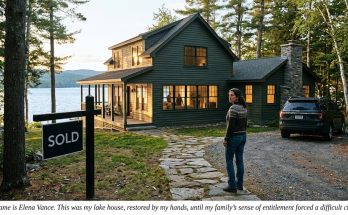
The lake was unusually quiet that afternoon.
There was almost no wind.
The trees barely moved.
Yet everyone on that porch seemed to be breathing too loudly.
My mother kept her arms folded.
Samuel stood with the document in his hand.
Richard looked confused.
Megan had stopped pretending to be busy with her phone.
I looked at the signature again.
Walter Harper.
My grandfather's name.
The name of the man who had taught me to fish.
The man who had left me the house.
The man whose handwriting I could recognize from across a room.
It looked convincing.
That was what frightened me.
Samuel turned another page.
“I've reviewed the original estate documents,” he said. “The signature on this paper does not match the authenticated signature samples.”
My mother shook her head.
“You're wrong.”
“I don't believe I am.”
“You didn't know my father.”
“No,” Samuel said calmly. “But I knew his legal records.”
She looked at me.
“This is what you wanted.”
“What?”
“You wanted to get rid of us.”
“I wanted to sell my house.”
“You've been trying to push us out for years.”
“I asked you to ask before staying.”
“That isn't the same thing.”
“No.”
I looked at the lake.
“It isn't.”
Richard stepped forward.
“Linda, what exactly did Dad sign?”
She didn't answer.
“Linda.”
“He signed an agreement.”
“When?”
“I told you.”
Richard looked at the document.
“October 2019?”
“Yes.”
He stared at her.
“I was there.”
She looked at him.
“At the hospital?”
“Yes.”
“I don't remember him signing anything.”
“You weren't in the room.”
Richard frowned.
“I was there for two days.”
Nobody spoke.
He looked at me.
“Was his hand working?”
“No.”
His face changed.
I could see the pieces coming together for him.
“You told me this was something he'd signed before the stroke.”
My mother looked away.
“I never said that.”
“You said Grandpa had promised you the house years ago.”
“I said he wanted me to have it.”
Richard rubbed his forehead.
“This says otherwise.”
I watched my mother.
She looked older suddenly.
Not physically.
Just tired.
For years, I had seen her as someone who always knew what to say.
Someone who could turn an argument around until I was apologizing for bringing it up.
Now she seemed to have run out of words.
Samuel pointed toward the signature.
“We also need to know where this copy came from.”
“I found it.”
“Where?”
She didn't answer.
“Mrs. Harper.”
“I found it among his papers.”
“When?”
“A while ago.”
“Why wasn't it included in probate?”
She stared at him.
“I didn't know I needed to submit it.”
Samuel's expression hardened.
“An ownership transfer involving real property would have been extremely relevant.”
She said nothing.
I felt sick.
Not because the document seemed fraudulent.
Because I had begun remembering all the little moments I had dismissed.
My mother asking for copies of Grandpa's old paperwork.
My mother once borrowing a folder from my condo after his estate had been settled.
My mother asking me which documents I had kept.
At the time, I thought she was grieving.
Maybe she was.
But grief and entitlement could exist together.
So could love and dishonesty.
That was the part I found hardest to accept.
Megan finally spoke.
“Mom, where did you actually get it?”
My mother looked at her.
“You don't need to know.”
“I do.”
“No, you don't.”
“Yes, I do.”
Megan's voice cracked.
“If this is fake, you could get in serious trouble.”
My mother looked toward me.
“I was trying to protect the family.”
I felt my throat tighten.
“From what?”
“You.”
The word landed harder than I expected.
“From me?”
“You were going to sell everything and walk away.”
“Yes.”
“Exactly.”
“It was mine.”
“You never understood what Grandpa wanted.”
“Then tell me.”
She didn't.
“Tell me what he wanted.”
She looked toward the fireplace through the window.
“He wanted everyone together.”
I shook my head.
“No. He wanted me to have the house.”
“He wouldn't have wanted you to sell it.”
“You don't know that.”
“I know my father.”
“So do I.”
We stared at each other.
Then Samuel said quietly, “Mrs. Harper, if the document was knowingly fabricated, this is no longer merely a family disagreement.”
My mother looked at him.
“I didn't forge anything.”
“You just said you created it to protect the family.”
Her eyes widened.
“I didn't say that.”
“You did,” I said.
She looked at me.
I had heard it.
So had everyone else.
Richard sat down heavily on one of the porch chairs.
“I need a minute.”
Megan walked away.
She stood at the edge of the yard with her arms wrapped around herself.
I followed her.
She didn't look at me.
“I'm sorry.”
I stopped.
“For what?”
“For believing Mom.”
I said nothing.
“She told me you were trying to punish everyone.”
“I wasn't.”
“I know.”
She wiped her eyes.
“I should have asked you.”
“Yes.”
She nodded.
For a while, we watched the water.
Then she said, “Did you really spend sixty-seven thousand dollars?”
“Approximately.”
“Why didn't you tell us?”
“I did.”
“No. I mean why didn't you tell us how much it was hurting you?”
I looked at her.
“Because every time I complained, someone told me I was making family uncomfortable.”
Megan closed her eyes.
“I remember.”
“What do you remember?”
“The curtains.”
I almost smiled.
“You remember that?”
“I remember Mom saying you were becoming controlling.”
“She changed them without asking.”
“I know.”
We stood silently.
The sheriff's deputy approached us.
He said the title company would likely need additional documentation.
I thanked him.
He nodded and walked back toward the road.
Inside the house, Samuel was speaking quietly with Rachel.
My mother sat at the dining table.
Richard stood by the fireplace.
I walked inside.
The room felt smaller than I remembered.
Maybe because so much had happened there.
Maybe because the house was no longer a symbol of family to me.
It was evidence.
Evidence of money.
Evidence of work.
Evidence of memories.
Evidence of boundaries I had ignored.
Rachel came over.
“The buyer is willing to wait.”
“How long?”
“As long as necessary to clear title.”
I nodded.
“I don't want to lose the sale.”
“You may not.”
Samuel joined us.
“The title company needs a formal response to the claim.”
“How long?”
“Possibly several weeks.”
I looked toward my mother.
She was staring at the table.
“Can she withdraw it?”
“Yes.”
“Will she?”
Samuel didn't answer.
I walked over.
“Mom.”
She didn't look up.
“Withdraw the claim.”
She shook her head.
“I can't.”
“Why?”
“Because then everyone will know.”
“They already know.”
“No.”
She looked up.
“They'll know I lied.”
“You did.”
Her eyes filled with tears.
For the first time, I saw how frightened she was.
But I couldn't let that fear erase what she had done.
“Tell the truth,” I said.
“I can't.”
“Why?”
She looked toward Richard.
He was staring at the fireplace.
Then she whispered, “Because it wasn't the first time.”
I froze.
“What wasn't the first time?”
She didn't answer.
Samuel stepped closer.
“Mrs. Harper?”
She shook her head.
“Forget it.”
“No.”
I looked at her.
“What wasn't the first time?”
She stood abruptly.
“I don't want to talk about this anymore.”
She walked into the kitchen.
Richard followed.
I stayed where I was.
My mind raced.
What did she mean?
What else had happened?
Had there been another document?
Another claim?
Another attempt to change the estate?
Or had she simply meant that she had lied before?
I didn't know.
And for the first time, I realized there were parts of my grandfather's final years I might never have been told.
That night, I stayed at a nearby hotel.
I couldn't bring myself to sleep at the house.
Around midnight, I opened the old photographs on my phone.
There was Grandpa standing on the dock.
Grandpa beside the fireplace.
Grandpa holding a fishing rod.
Then I found one I had forgotten.
It was taken a few months before his stroke.
My mother stood beside him.
He was holding a folder.
I zoomed in.
On the table behind them was a stack of papers.
I stared at the photograph.
The folder looked familiar.
It was the same kind of folder my mother had borrowed from me years earlier.
I called Samuel.
He answered on the third ring.
“What is it?”
“I found a photograph.”
I sent it.
He was quiet for a moment.
“Do you know when this was taken?”
“About six months before Grandpa died.”
“Can you send me the original file?”
“Yes.”
A few minutes passed.
Then he called again.
“Natalie, look at the corner of the table.”
“I am.”
“There's a document.”
“I see it.”
“Can you enlarge it?”
I did.
There was a handwritten note on top.
I could make out only a few words.
Property—
Then another line.
Natalie—
My heart stopped.
“Samuel.”
“Yes?”
“I think Grandpa may have written something to me.”
“Don't assume yet.”
“I recognize his handwriting.”
The photograph was blurry.
But the note was unmistakable enough to make me sit upright.
I stared at the screen.
“What if Mom knew about this?”
Samuel was silent.
Then he said, “Then we need to find the original.”
The next morning, I returned to the lake house.
My mother was gone.
So was Richard.
Megan was standing in the kitchen.
She looked at me.
“Mom took something.”
“What?”
“A box.”
“What box?”
“I don't know.”
“Where did she go?”
Megan shook her head.
“She said she needed to find something before you did.”
I felt the blood drain from my face.
“Find what?”
Megan looked toward the hallway.
“She said Grandpa left another letter.”
I didn't move.
“What did she say about it?”
“She said if you found it, you'd sell the house anyway.”
I looked toward the old stone fireplace.
The same fireplace I had spent nearly a month restoring.
For years, I had thought the house contained only memories.
Now I wondered whether it contained a piece of the truth my family had been hiding from me.
Click here to continue reading: PART 4: A Hidden Letter, a Missing Folder, and One Last Conversation With My Mother Forced Me to Decide What Grandpa Had Really Left Behind
My Mother Closed the Door on Me at the House I Had Spent Years Saving, and That One Sentence Changed What I Was Willing to Tolerate
Part 3 of 3